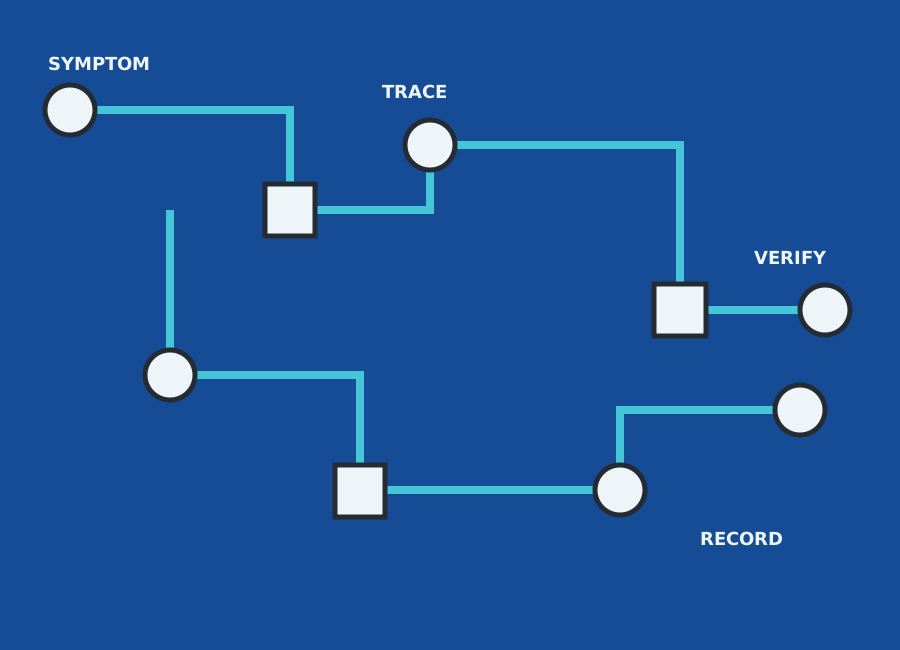
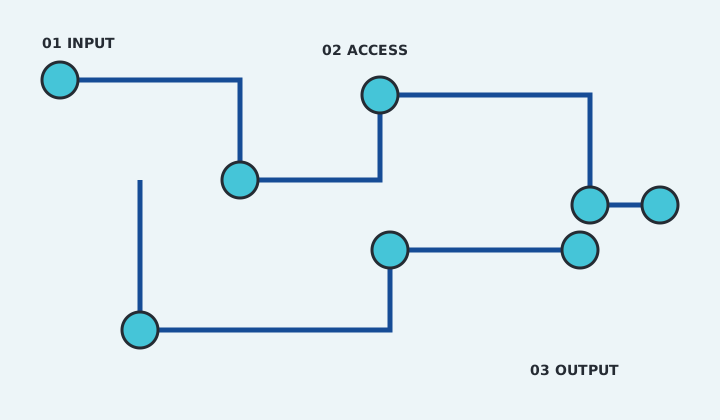
N-01Keep the first node literal
Write what a person can see, hear, or time: water at the rear of the cabinet after the dishwasher pumps out, a toilet that refills every twelve minutes, or weaker cold flow at one sink. A repair name belongs later, after an inspection supports it.
When the effect changes, add a new dated node instead of rewriting the first one. That preserves the history another provider or the Town may need.
N-02Draw normal comparisons too
An unaffected fixture can be as useful as the one that changed. Compare a nearby outlet, another floor, the hot and cold sides, or a different cycle stage only when normal use is safe. These control points help define whether the current evidence stays local or crosses a system branch.
Do not create overflow, extreme temperature, electrical exposure, or additional leakage for the sake of a comparison.
N-03Map access before agreeing to work
Cabinets, appliance clearances, finished walls, tile, floors, ceilings, crawlspaces, and equipment panels change the real project. Ask what the provider can inspect without opening finishes, what evidence would justify access, who protects the space, and who restores it.
An inaccessible area should remain labeled unknown. It should not be represented as inspected, dry, or clear merely because the first repair is complete.
N-04Separate Town and property routes
Walpole publishes building, plumbing permit, Sewer & Water, meter, alert, and system-rule resources. Those pages answer public process questions. The property address, actual system, service record, and private inspection evidence are often needed before a responsibility boundary can be discussed.
Use the current official page. A dated flushing notice or general rule should not be presented as the cause of today's symptom.
N-05Verify the person behind the scope
Get the exact business identity and the responsible plumber's name, license type, and number. Check current Massachusetts information and connect the result to the proposal, permit responsibility, and people who will be on the job.
Then compare the written finding with the work offered. Advertising, a referral transfer, or a familiar company name does not substitute for that chain of responsibility.
N-06Issue a final record set
Closeout should show the starting symptom, finding, access used, final work, operation checked, approvals, products, changes, invoice, warranty, and every task still open. Plumbing, public utility, appliance, electrical, cleanup, drying, and finish work may have different owners.
The final set is complete when another person can see both what happened and what did not happen without relying on sales language or memory.